
Understanding Metastatic Cancer: How Cancer Spreads and Why It Matters
Metastatic cancer is cancer that has spread from where it first started to other parts of the body. For patients and families searching for Cancer treatment St. Petersburg FL, understanding this condition is an important first step. Cancer cells can travel through the blood or lymphatic system and form new tumors in other organs. While a metastatic diagnosis can feel overwhelming, today’s treatment options can help manage the disease and improve quality of life.
Metastatic cancer does not mean that treatment options are limited. Depending on the type of cancer, where it has spread, and the patient’s overall health, treatment may include chemotherapy, immunotherapy, targeted therapy, hormone therapy, or a combination of treatments. At Comprehensive Hematology Oncology, we focus on providing clear information and personalized care to help patients understand their options and move forward with confidence.
What Is Metastatic Cancer?
Metastatic cancer occurs when cancer cells break away from the original (primary) tumor and travel to other parts of the body, forming new tumors. This process is called metastasis, and it’s why doctors refer to advanced cancer as “Stage IV.”
Importantly, metastatic cancer is still named after where it started. Breast cancer that spreads to the bones is called metastatic breast cancer, not bone cancer because the cells found in the new tumor are breast cancer cells, not bone cancer cells. This distinction matters because it guides how oncologists choose treatment: they’re treating the biology of the original cancer, wherever it has traveled.
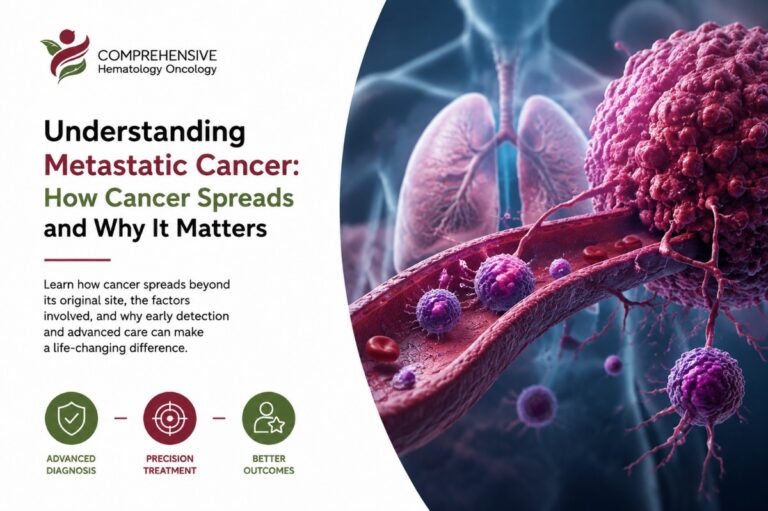
How Cancer Spreads: The Biology Behind Metastasis
Metastasis is a multi-step biological process, and cancer cells have to “succeed” at each stage to form a new tumor elsewhere in the body.
Local invasion: Cancer cells first grow beyond the tissue where they originated, breaking through nearby structures and gaining access to blood vessels or lymphatic channels.
Traveling through the bloodstream and lymphatic system: Once cancer cells enter circulation, they can travel throughout the body. Most of these cells don’t survive the journey, the immune system and the physical stress of circulation destroy the majority of them. But a small number can survive long enough to reach distant tissue.
Colonization in a new site: Surviving cancer cells must then attach to a new location, establish a blood supply, and begin dividing. This step can happen quickly or lie dormant for months or even years before becoming detectable, which is part of why cancer can sometimes recur long after initial treatment.
Understanding these mechanics helps explain why oncologists monitor certain patients closely even after successful initial treatment and why early detection of spread makes such a meaningful difference in treatment options.
Common Sites Where Cancer Spreads
Cancer doesn’t spread randomly. Different cancer types tend to favor specific organs, a pattern researchers describe using the “seed and soil” theory, cancer cells (the seed) thrive best in certain tissue environments (the soil).
Bone — common in breast, prostate, and lung cancers
Liver — frequently affected by colorectal, pancreatic, and breast cancers
Lung — a common site for breast, colorectal, kidney, and many other cancers
Brain — often seen with lung, breast, and melanoma cancers
Knowing these patterns helps oncology teams anticipate where to look during monitoring and staging, allowing for earlier detection of spread.
Signs and Symptoms of Metastatic Cancer
Symptoms of metastatic cancer vary significantly depending on where the cancer has spread. Some patients experience noticeable symptoms, while others are diagnosed through routine scans before symptoms appear.
Bone metastasis: persistent bone pain, fractures with minimal trauma, elevated calcium levels
Liver metastasis: abdominal swelling or pain, jaundice, unexplained fatigue
Lung metastasis: persistent cough, shortness of breath, chest discomfort
Brain metastasis: headaches, vision changes, balance issues, seizures, cognitive changes
General symptoms across many types of metastatic cancer include unexplained weight loss, ongoing fatigue, and a general sense that something isn’t right. Any new or persistent symptom after a cancer diagnosis is worth discussing with your care team promptly.
How Metastatic Cancer Is Diagnosed
Diagnosing metastatic cancer typically involves a combination of tools working together:
Imaging tests — CT scans, MRIs, bone scans, and PET scans help locate areas of suspected spread
Biopsies — tissue samples confirm whether a new growth is the same cancer type as the original tumor
Blood tests — tumor markers and other bloodwork can indicate disease activity
Staging — once metastasis is confirmed, the cancer is classified as Stage IV, which describes the extent of spread rather than how aggressive or treatable it is
A precise diagnosis is essential because treatment decisions are built around exactly where the cancer has spread and how much.
Why It Matters: Metastasis and Treatment Planning
A metastatic diagnosis shifts the treatment conversation. Rather than focusing solely on removing or eliminating a tumor in one location, treatment planning becomes about controlling the disease throughout the body, managing symptoms, and preserving quality of life.
This is also why metastatic cancer care tends to be more personalized than early-stage treatment. Two patients with the same original cancer type but different patterns of spread may follow very different treatment paths. Genetic and molecular testing of the tumor often plays a larger role at this stage, helping identify targeted therapies that may work best for a specific patient’s cancer.
Treatment Options for Metastatic Cancer
Treatment for metastatic cancer is rarely a single approach, it’s usually a combination tailored to the patient’s specific diagnosis, overall health, and goals of care.
Systemic therapies — chemotherapy, immunotherapy, and targeted therapy travel throughout the bloodstream to address cancer cells wherever they’ve spread
Radiation therapy — often used to shrink tumors, relieve pain, or address specific areas of spread, such as bone or brain metastases
Surgery — less common at this stage but sometimes used to relieve symptoms or remove isolated areas of spread
Clinical trials — access to emerging treatments and novel drug combinations that may not yet be widely available
Because metastatic cancer often requires long-term management rather than a single course of treatment, having a coordinated care team that can adjust the plan as needed is critical.
Living With Metastatic Cancer
A metastatic diagnosis doesn’t mean treatment stops making progress, many patients manage the disease as a chronic condition for years, continuing work, family life, and personal goals alongside ongoing care.
Quality of life matters as much as the treatment plan itself. Palliative and supportive care including pain management, nutritional support, and emotional counseling is often integrated alongside active cancer treatment, not reserved for end-of-life care. Support groups, patient advocacy resources, and open communication with your care team can also make a meaningful difference in navigating day-to-day life with metastatic cancer.
How Comprehensive Hematology Oncology Can Help
For nearly three decades, Comprehensive Hematology Oncology has provided patient-centered cancer care across the Tampa Bay area, including Pinellas, Hillsborough, Pasco, and Manatee Counties. Our team takes a multidisciplinary approach to metastatic cancer, bringing together medical oncology, radiation oncology, hematology, and an on-site infusion center so patients aren’t left coordinating care across multiple unfamiliar offices.
We also offer access to clinical trial participation, giving patients the opportunity to explore emerging treatment options alongside standard care. If you are looking for cancer treatment St. Petersburg FL, our team is here to explain your options, answer your questions, and provide compassionate support at every stage of diagnosis and treatment.
Conclusion
Understanding how and why cancer spreads can make a metastatic diagnosis feel less like an unknown and more like a path forward. While a Stage IV diagnosis brings real challenges, treatment options have expanded significantly, and personalized, multidisciplinary care can help patients maintain quality of life while actively managing the disease.
If you are facing a new or existing metastatic cancer diagnosis and are seeking cancer treatment St. Petersburg FL families have relied on, the team at Comprehensive Hematology Oncology can help you understand your diagnosis, explore available treatment options, and develop a care plan tailored to your needs. Schedule your consultation today!
Frequently Asked Questions
1. Is metastatic cancer curable?
Some metastatic cancers can be treated successfully, while others can be controlled for a long time. Treatment depends on the cancer type, spread, and response to therapy.
2. What does Stage IV mean?
Stage IV means the cancer has spread from its original location to other parts of the body. It does not always determine the treatment outcome.
3. Can metastatic cancer go into remission?
Yes. Some patients can achieve remission, meaning cancer signs or symptoms decrease or disappear for a period of time.
4. How quickly does cancer spread?
The spread rate varies by cancer type and individual. Some cancers spread quickly, while others develop more slowly.
5. What should I do if I notice new symptoms after cancer treatment?
Report any new or persistent symptoms to your oncology team promptly. Early evaluation allows for faster diagnosis and more treatment options if spread has occurred.